If you are looking for a rhinoplasty doctor in Indore, you are probably considering a big decision. Your nose is right in the center of your face, so even a small change can affect how you look and how you feel about yourself. Some people are looking for a better profile. For some, it is breathing freely again. A good surgeon can help with either one.
This guide will help you understand what rhinoplasty is, who it is for, how to pick a good surgeon in Indore, what the recovery looks like, and what to ask before you book.
What Is Rhinoplasty?
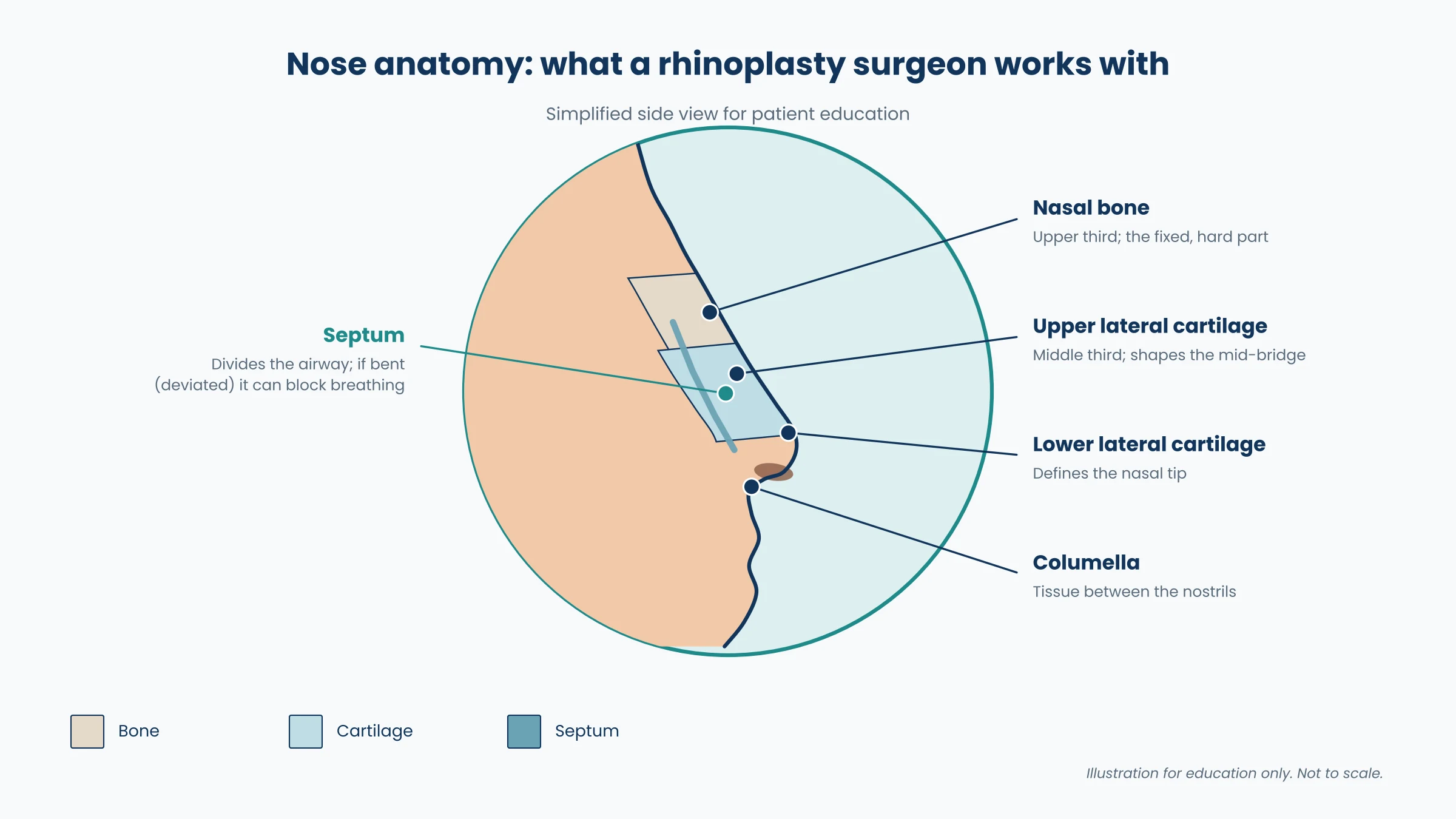
Rhinoplasty, or nose job, is a surgery that reshapes the nose. It can alter the size, angle, tip, bridge, or width of the nostrils.
The operation is usually carried out under a general anesthetic or sedation with a local anesthetic and usually lasts between one and three hours depending on the plan. Most patients go home the same day or after an overnight stay.
Who Is a good Candidate for Rhinoplasty?
You may be a good candidate if you:
- Are at least 18 and your nose has finished growing
- Are in good general health and do not smoke, or can stop before surgery
- Have a bump, a wide bridge, a drooping tip or an asymmetric nose that bothers you
- Have trouble breathing through your nose because of a deviated septum
- Have realistic expectations about what surgery can and cannot do
A good surgeon will tell you honestly when surgery is not the right choice, or when a smaller change will look more natural.
Types of Rhinoplasty Offered in Indore
1. Cosmetic Rhinoplasty
Reshapes the nose bridge, tip or nostrils to improve facial balance and appearance. Ideal for people who want to change the overall look of their nose.
2. Functional Rhinoplasty and Septoplasty
Corrects structural problems, straightens the nasal septum and improves airflow. Suitable for people experiencing breathing difficulties, nasal blockage or related concerns.
3. Revision Rhinoplasty
Corrects or improves the results of a previous nose surgery. Recommended for individuals who are unhappy with their earlier rhinoplasty results or have persistent functional issues.
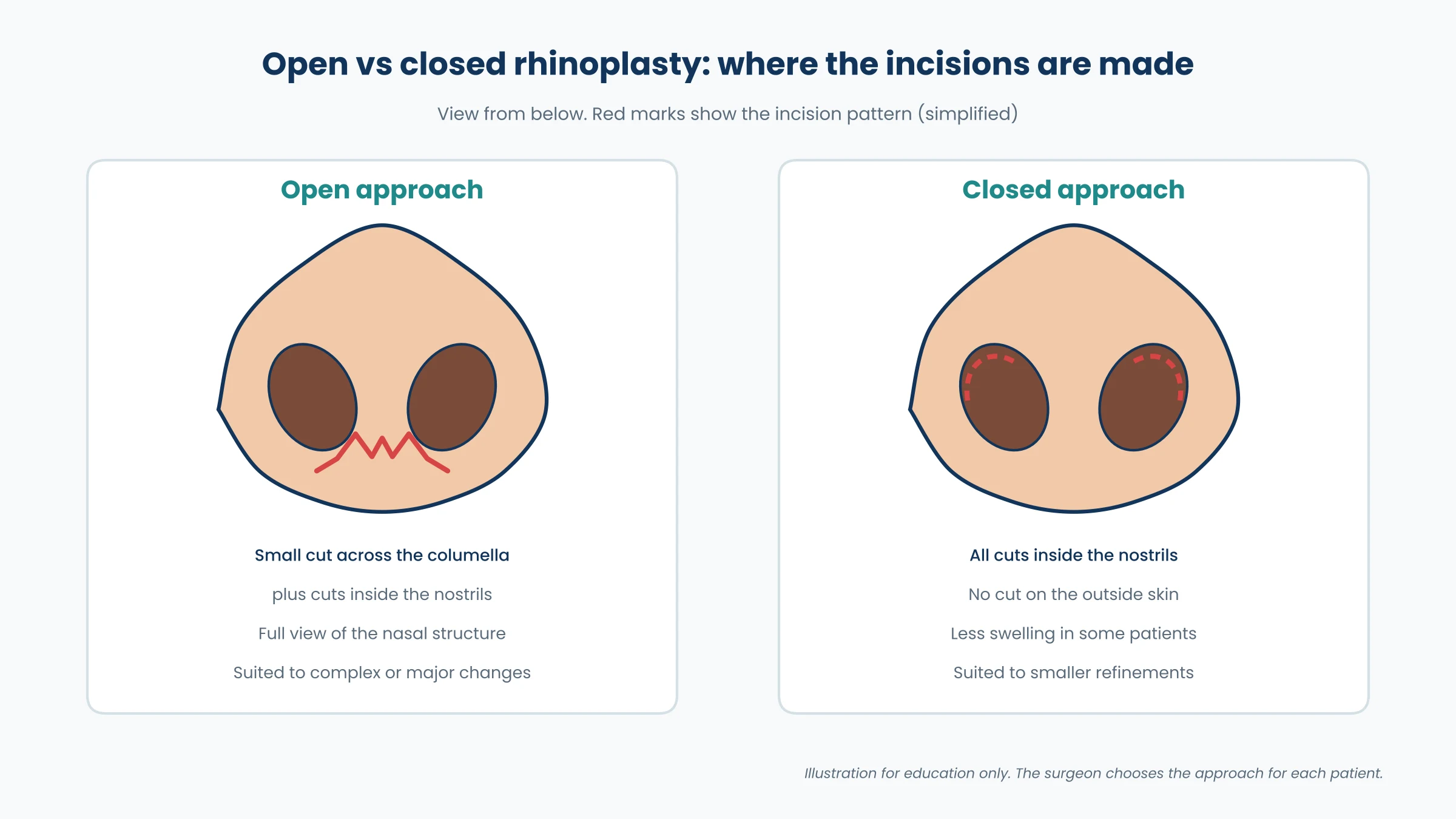
4. Open Rhinoplasty
Involves a small incision across the columella (the tissue between the nostrils), allowing the surgeon better visibility of nasal structures. Often used for complex or major reshaping.
5. Closed Rhinoplasty
All incisions are made inside the nostrils, leaving no visible external scar. Commonly used for selected nose reshaping and refinements.
6. Non-Surgical Rhinoplasty
Uses dermal fillers to make minor changes, such as smoothing small bumps or improving the appearance of the nasal bridge. Results are temporary and do not replace surgical correction.
The appropriate rhinoplasty technique depends on your nasal structure, breathing function, goals and surgeon’s assessment.
How to Choose a Qualified Rhinoplasty Surgeon in Indore
- Check qualifications. Look for a plastic surgeon with an MCh in Plastic Surgery or an ENT surgeon with specific training in facial plastic surgery. Verify registration with the Madhya Pradesh Medical Council or the National Medical Commission.
- Ask how many rhinoplasties they do each year. Nose surgery is technically demanding. Experience with your type of nose matters.
- Expect realistic outcomes. A surgeon should explain what is realistic for your nose, and should never guarantee a result.
- Expect a proper consultation. A good doctor examines your nose, discusses your goals, explains the risks, and may show a digital simulation. Be careful of anyone who promises a specific result or pushes you to book on the same day.
- Confirm the facility. The surgery should happen in a hospital or accredited operation theatre with a qualified anaesthetist and emergency backup.
- Read patient reviews with care. Reviews on Google and Practo can help, but treat them as one input among several.
- Ask about follow-up and revision policy. Find out how many check-ups are included and what happens if a touch-up is needed.
- Get the full cost in writing. It should cover the surgeon’s fee, anaesthesia, hospital stay, medicines and follow-up visits.
What Happens During Rhinoplasty?
- Consultation and planning. Your surgeon examines your nose, takes photos, and agrees on the goals with you.
- Anaesthesia. You receive general anaesthesia or sedation with local anaesthesia.
- Incisions. Cuts are made inside the nostrils (closed) or across the columella (open).
- Reshaping. The surgeon refines bone and cartilage and may use cartilage grafts to support the new shape.
- Closing and support. Incisions are closed, and a splint is placed on the nose.
Recovery Timeline for Rhinoplasty
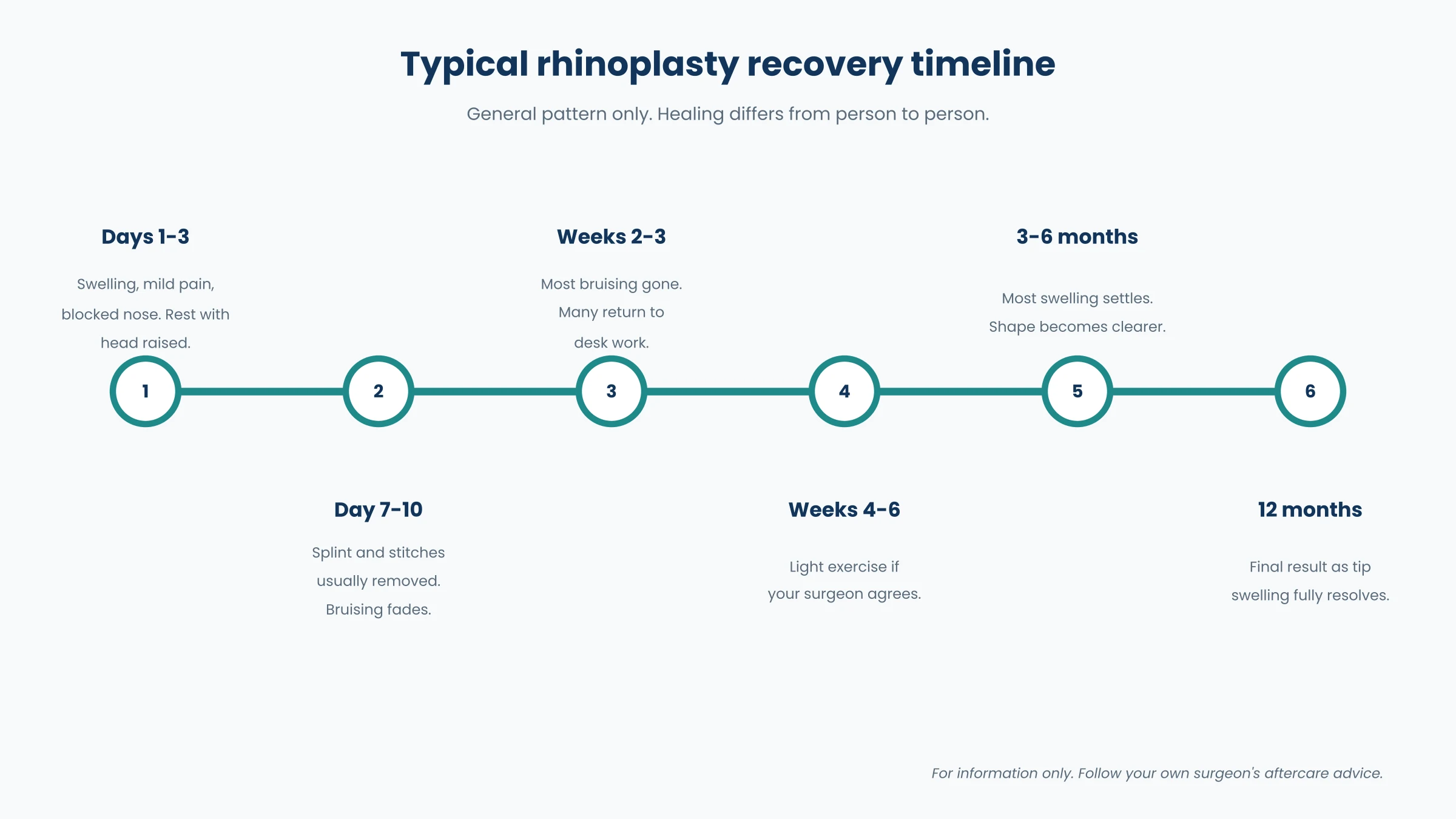
Everyone heals differently, but here is a general timeline of recovery after a nose job surgery.
Day 1-3: Swelling, mild pain, and nasal congestion are common. Sleep with your head raised.
Days 7-10: The nasal splint and sutures are typically removed. The bruises are fading slowly.
Weeks 2–3: Most of the bruising will have disappeared, and many patients can return to desk work.
Weeks 4 to 6: You may start light exercise, with your surgeon’s approval. .
3-6 Months: Most of the swelling goes away, and the new shape of the nose becomes more defined.
12 Months: Residual swelling, particularly around the nasal tip, disappears and final results are more visible.
Everybody heals in their own way. Always follow the post-operative instructions that your surgeon gives you.
Cost of Rhinoplasty in Indore
Price depends on:
- Surgical complexity (primary, revision, septum work, grafts)
- The surgeon’s experience
– Charges of the hospital or operation theater
- Anesthesia and length of stay
- Follow-up visits and medication
The cost of nose surgery in India is generally anywhere between ₹50,000 and ₹2,50,000 or more. This is just a rough estimate. [Please insert your clinic’s price range, or write: “Contact the clinic for an exact quote.”]
Risks to Watch For: All surgery carries risks. For rhinoplasty, they include bleeding, infection, prolonged swelling, breathing difficulty, numbness, asymmetry, and the need for a revision. These risks are less common if you opt for a trained surgeon and closely follow aftercare. Your surgeon should go over them with you in full before you consent.